

What Is Love
Her hair moved like night remembering the wind, a spill of black ink that refused the lamp’s small mercy. Pale sigils shimmered beneath her skin, webbed constellations mapping scars the world could not name. She pressed her hands to the sides of her head as though cradling a storm, and her mouth—red as a vow—did not tremble. I had come seeking an answer I had no right to demand, and found instead a question wearing a human face.
They called her a witch, a sorrow, a mirror; I called her necessary. “Love,” I asked, and the word tasted like iron and rain. She did not smile. The lights in her wrists brightened, traveling the bones like migrating stars. “What is love?” she echoed, and the darkness leaned closer to listen. In her gaze lived a calculus of joy and ruin, of hands that heal and hands that haunt—an old arithmetic that promised to change me or end me.
So our bargain was struck without ink: follow the threads of those pale runes into memory and myth, into the rooms where names are removed and given back, into the quiet where longing learns to speak true. If love is a spell, we will cast it; if it is a hunger, we will feed it; if it is a door, we will walk through. And if love is none of these, then let the night teach us what remains when the light has chosen to stay.
The Wheels Of Life
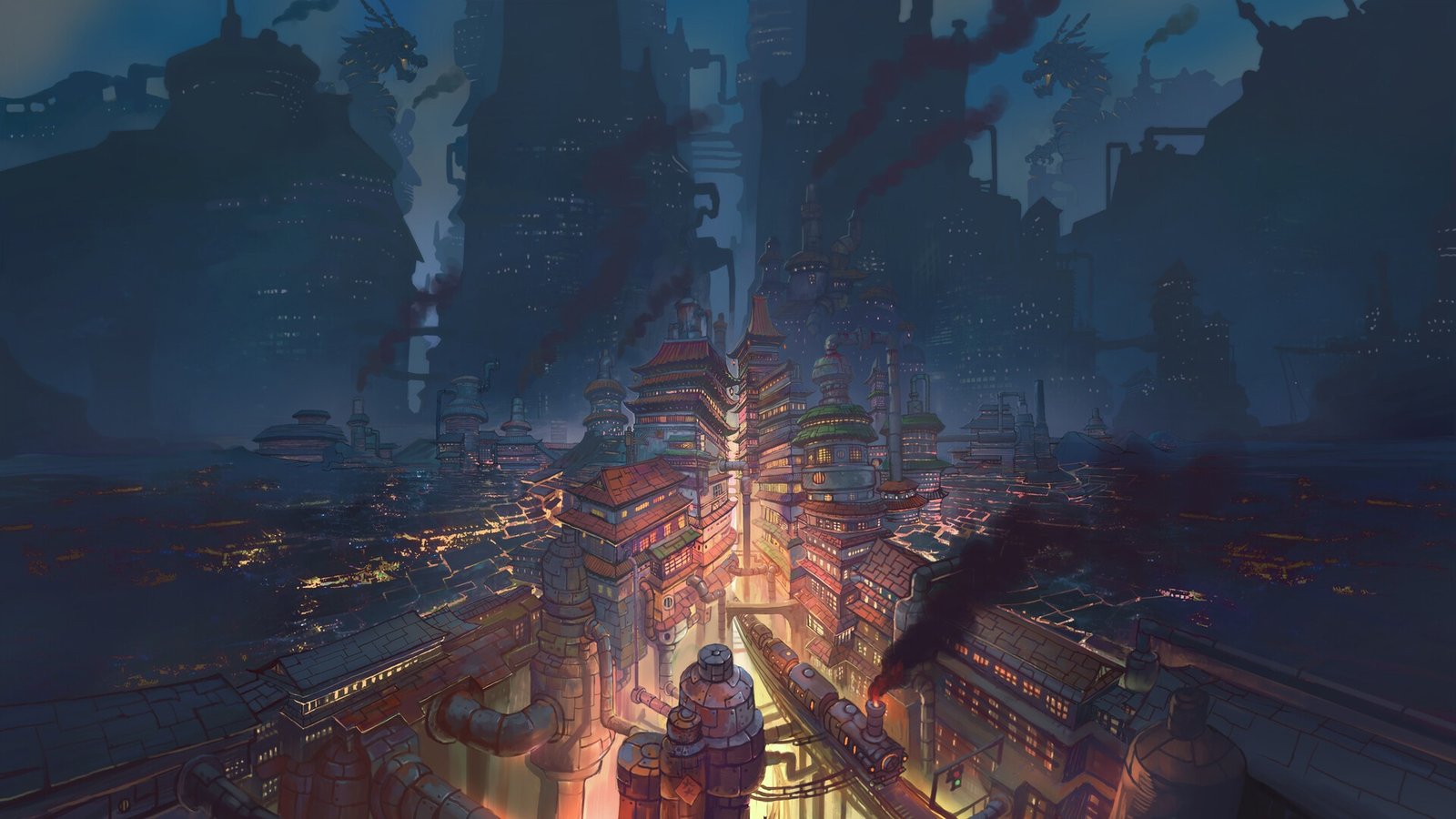
Night lays a blue hand over the city while the furnaces write their own dawn beneath it. Stacked roofs glow like embers in a brazier, pipes knit alleys to chimneys, and a train threads the ribbed bridges like a needle through a wound. Great silhouettes—dragon-bodied boilers and cliff-high factories—watch from the haze as smoke drifts like prayer. Far below the lantern streets, a chasm hums with hidden axles, and the earth itself seems to breathe in piston beats. Here, time is not told by clocks but by the rhythm of iron.
They say the founders set the Prime Wheels to keep the city from slipping into the dark, that the teeth of those buried gears bite the days and grind them into years. Markets turn with their cadence; faith turns with their patience; even language ticks to the pace of steam. Children learn to listen before they learn to read—metal speaks, and its grammar is pressure, weight, and heat. When the quarters align their spin, fortunes rise; when they grind against one another, sparks fall like summer rain.
Tonight, the chorus catches. It is nothing a stranger would hear—just a shiver hiding in the bearings, a late sigh from a dragon-stack, a heartbeat half a beat slow. But the city knows. The rails feel it. The river of light in the depths leans a fraction to one side, as though the world has shifted its attention. In a place where motion is survival and purpose is a turning, something—or someone—has been chosen. The wheels do not merely carry life. They choose its direction.
Far From Home
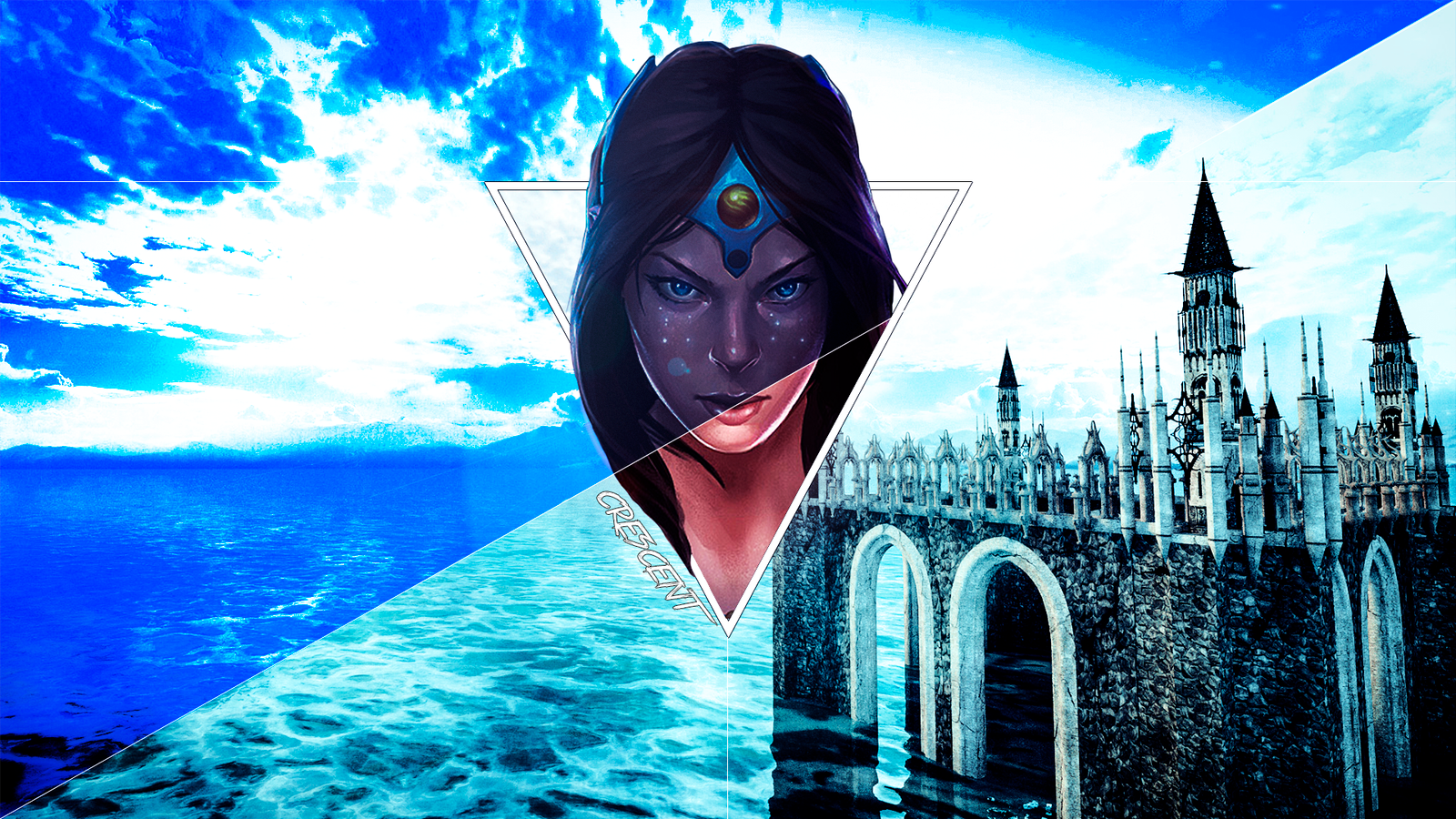
The sea had carried me as far as it could, leaving me at a bridge of pale stone that rose from the water like the ribs of some sleeping leviathan. Beyond its arches, the citadel’s spires stitched the sky with needles of light, each tower a promise or a warning. The wind tasted of salt and old vows, and the horizon blazed as if a door had been opened in the sun.
In that opened light a shape resolved—three bright edges holding a stranger’s face. Night-kissed skin, constellations freckled across her cheeks, a crescent set at her brow like a tide caught in metal. She studied me with the certainty of a star chart, as though she had been expecting me ever since the first wave learned my name. Some part of her was mirror, some part omen; when she breathed, the sea at my back answered.
They say the city chooses its arrivals, that its gates listen for footsteps woven from distance and from loss. I crossed the first arch and felt the world narrow to a filament, a thread strung between who I had been and who the towers required. Far from home, I realized the map was not a parchment but a pulse—hers, mine, and the water’s—beating toward a place where departures and destinies share the same shore.
Catch Me If You Can
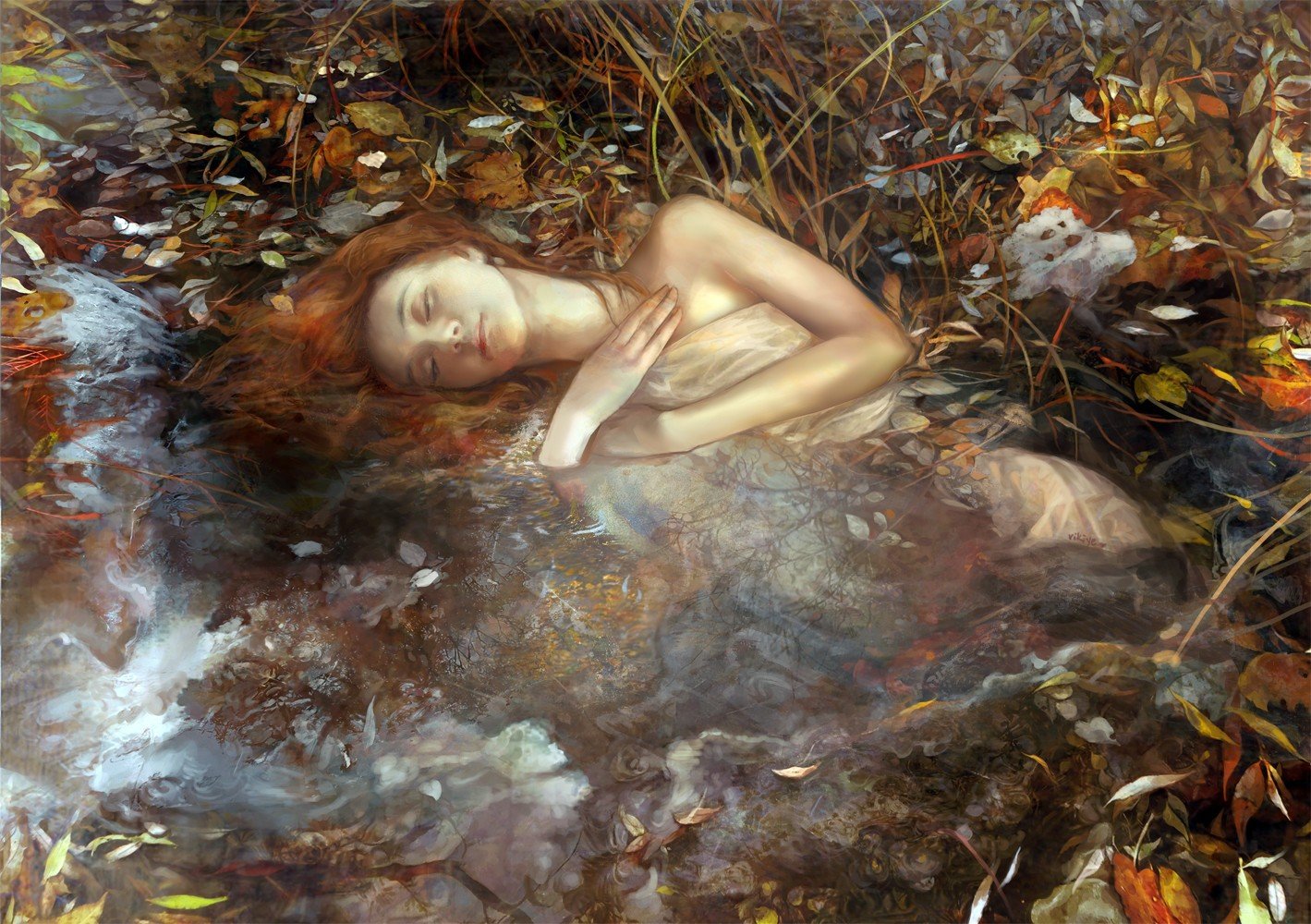
The river keeps its bargains in a language of leaves. Tonight it speaks in copper and ash, a hush of water cupped around a sleeping figure, pale as the moon that taught it to shimmer. Her hair unfurls like a slow flame beneath the surface, and the current hushes over her as though finishing a sentence only the forest can hear.
Listen closely: there is laughter in the eddies, a dare braided into the reeds. “Catch me if you can,” it murmurs—not with lips, but with the glide of silk against stone, with the fragile drift of white petals skating past. She has chosen the oldest hiding place, where footsteps dissolve and names become ripples. To follow, you must learn to run without noise, to read the river’s cursive, to count the heartbeats between two falling leaves.
By dawn, the water will have carried the challenge downstream, threading it through root and shadow, town and bell. Someone will take it up—you, perhaps—wading after a ghost of warmth, after a whisper that refuses to be anchored. But be warned: the chase belongs to the river as much as to the hunted, and it delights in teaching every pursuer the art of being almost, almost in reach.
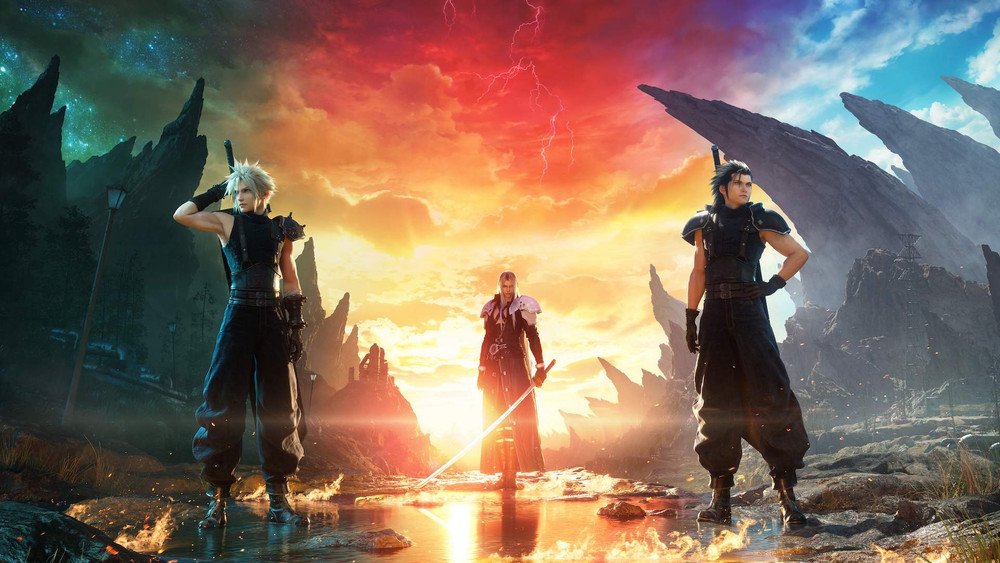
Twin Warriors
The sky had been torn in two—ember dawn to the east, bruised storm to the west—and the broken land wore both colors like conflicting prayers. Jagged spires leaned over a flooded plain that mirrored fire and thunder in equal measure, turning puddles into molten coins of light. In that wavering mirror the twins glimpsed themselves not as reflections, but as choices the world demanded.
Born a breath apart, they learned to move like halves of one strike: one steady as a held note, the other quick as breath after running. Their blades carried different seasons—one winter-cold, one summer-swift—yet their steps sparked the same brief stars across the wet stone. Around them, rusted lamps bowed like tired sentries, and the wind threaded their silence with the scent of rain and ash.
On the horizon waited a figure robed in thunder, sword tilted to drink lightning, a smile stitched with promises older than law. He was the seam that split the sky and the rumor that set empires shaking. The twins advanced together—neither first, neither last—until the earth itself seemed to pause beneath their boots. They did not vow to win, only to remain two in a world that would forge them into one, and the storm—amused or wary—answered with a single, listening crack of light.
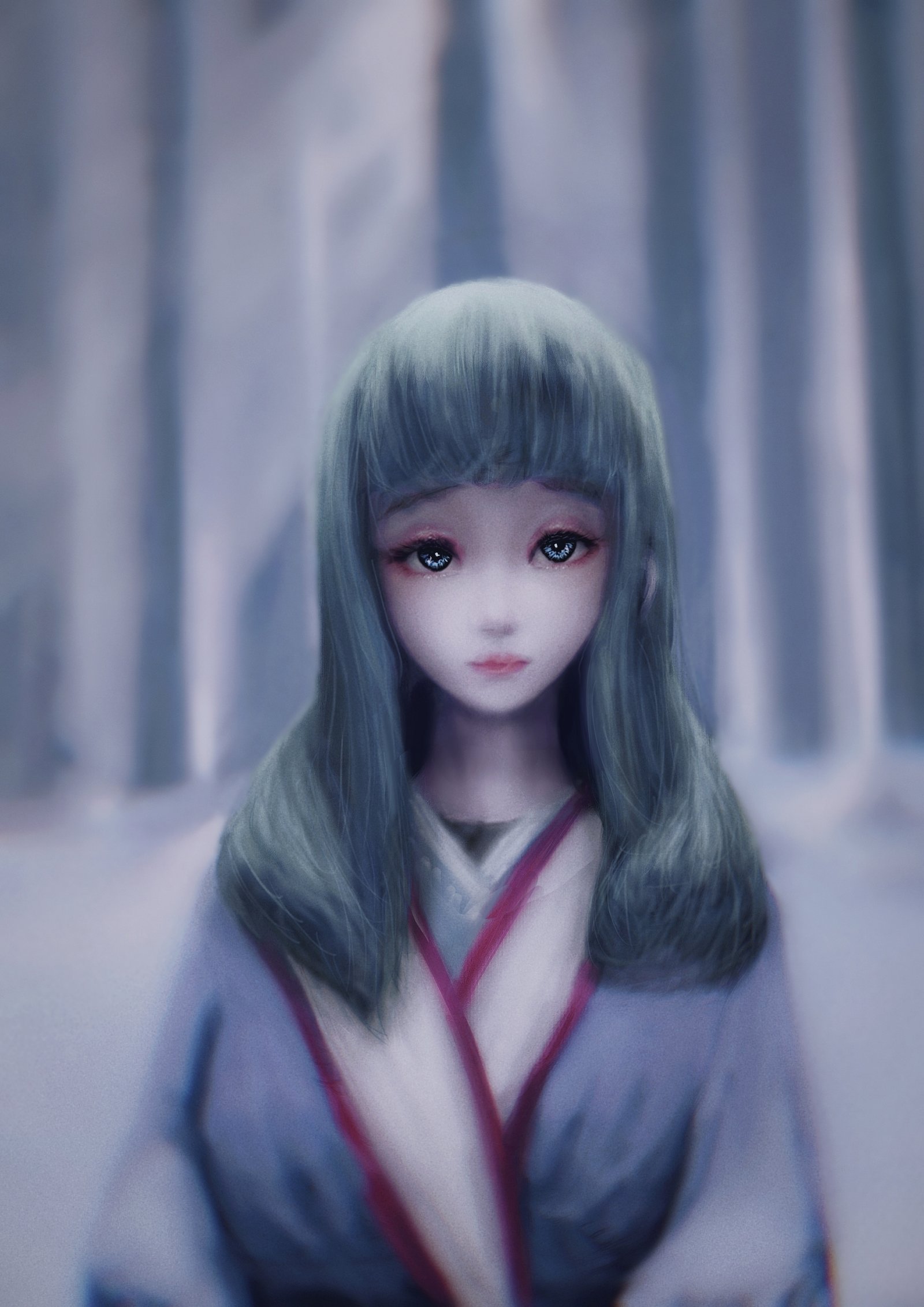
Bossom
They called the hush between the pale columns Bossom—an embrace that commands, a mercy that binds. In that blue-quiet, a girl with river-grey hair stood as if carved from the very stillness, her eyes bright with the patient shine of distant constellations. The red-lined fold of her robe marked an old oath stitched into her blood, one thread to hold when the world forgot how to hold itself.
Bossom was once a vow the elders wore over their hearts: keep the sorrows of the valley, cradle them until they softened. But vows fray when names are lost, and the guardians drifted like breath on winter glass. She remained—the last seam between silence and story—listening to the wind’s low hymn as it moved through the towering trunks like a loom tightening.
Tonight the air trembled, and the pillars answered with a tone that tasted of thaw. Somewhere beneath the frost, a buried heartbeat counted out a path, knot by knot, toward her waiting hands. When she steps forward, when she dares to tug the crimson thread free, Bossom will either unmake the quiet or teach it to sing—and the world, at last, will remember its own name.
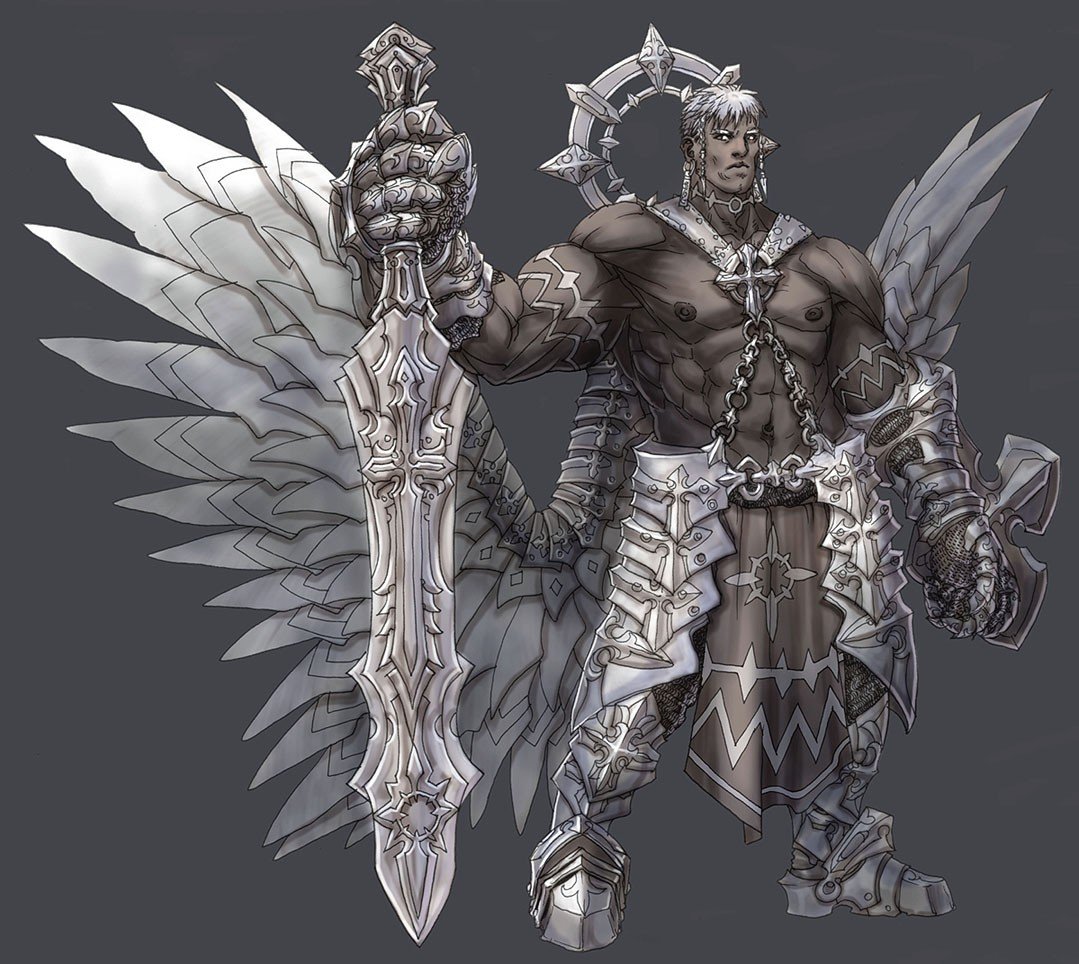
My man
He came down like a verdict etched in silver, a cathedral’s worth of metal folded into wings. The city swore he was an omen, a stray seraph cast from a court that forgot mercy, but I knew the louder truth before anyone dared speak it: he was the promise I had made to myself on the night the bells burned. Chains crossed his chest like bridles for a storm, and his sword—broad as a door to afterlife—carried the patient shine of something that has outlived gods and kept their secrets.
They say his armor was forged from shattered reliquaries, each plate a vow hammered flat, each sigil a law he broke to protect a soul that didn’t deserve the breaking. The halo wasn’t a circle so much as a gear, turning behind him, grinding time forward; his wings shed pale quills that struck the ground like quiet verdicts. He did not speak in the language of saints. He spoke in the grammar of scars, of work, of choices that cost more than coin and less than eternity.
I found him at the edge of the ruin where sky and ash hold hands, and when he lifted his gaze, the world learned my name from his mouth. The war had already chosen its thrones; we chose each other instead. If heaven will not claim him, earth will—through my vow, my witness, my hands steadying the weight of his legend. The road ahead is a bright, terrible sentence, and I will read it beside him, one step at a time, until the last feather falls and there is no word left but the first I gave him: my man.
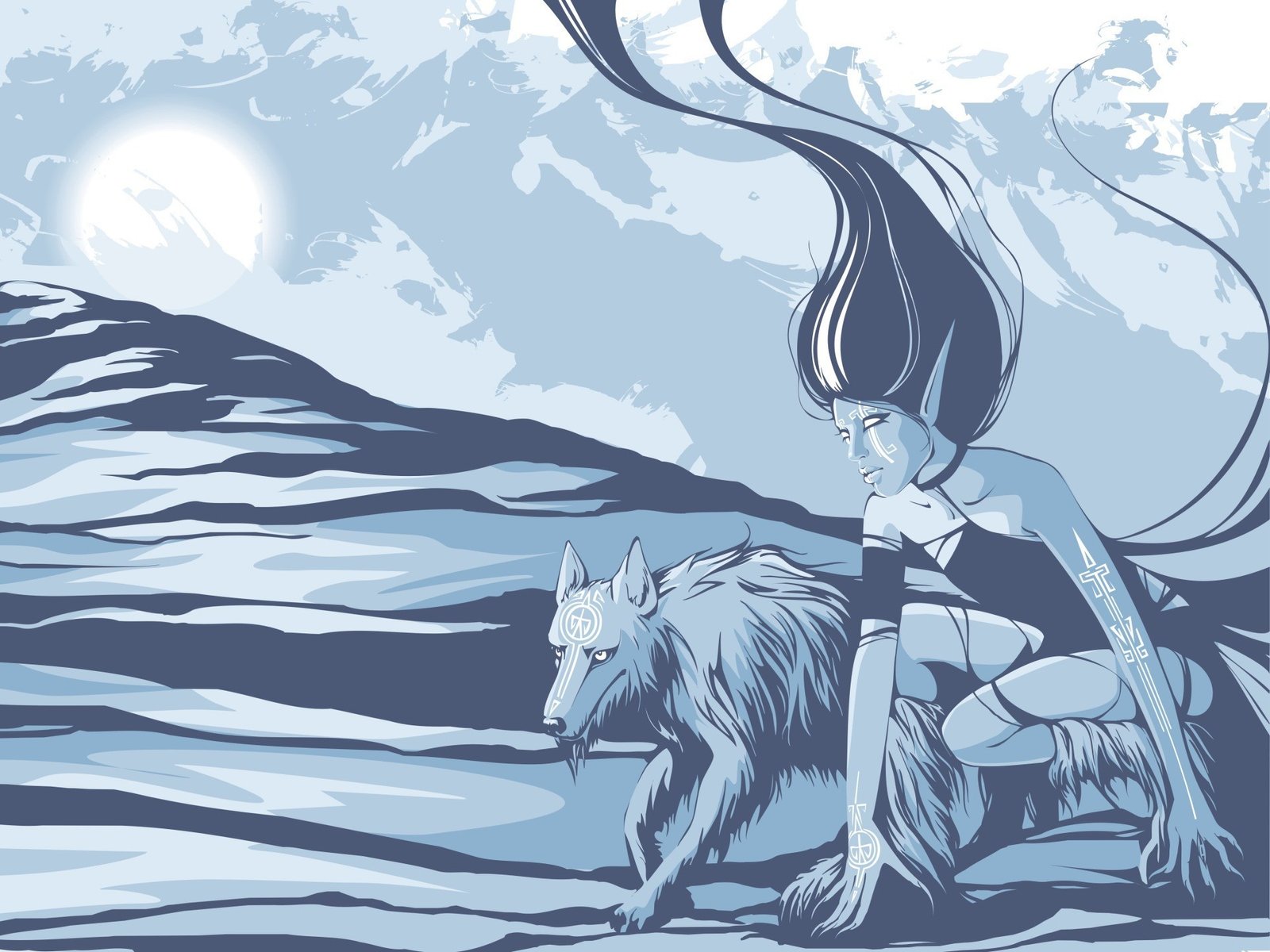
School is hard
On the ice-bitten flats, where the sun looks like a pale coin lost in a torn sky, a novice knelt beside her wolf and studied the wind as if it were a blackboard. Runes glowed along her skin—lessons inked in light, reminders that knowledge leaves marks, and that some subjects grade in scars. Her hair streamed like banners caught in winter’s breath; the wolf’s own sigils shimmered across its brow, a promise and a warning. Together they faced the ridge where the Academy of Stone and Silence hid its doors, because here admission was not an essay—it was endurance.
Their syllabus was simple. First: hear what the cold says when it chews the edges of your resolve. Second: walk anyway. Third: when fear breaks its pencil against your heart, let the wolf write for you. The novice traced a palm along the beast’s shoulder and felt the old language of the wild hum back—an alphabet of muscle and patience, of hunger and restraint. Above them, the sky shifted shades like pages turning, and the runes on her arms fluttered with tiny, uncertain meanings yearning to become sentences.
Behind the ridge, teachers waited with eyes like whetstones, tallying who would arrive and who would be corrected by the snow. Ahead, the day opened into a blank sheet no tutor could spare her from. School is hard, the world harder; but if she could cross this first question without erasing herself, she might yet learn to write thunder, to solve for the unknown inside every shadow. She rose with the wolf and stepped toward the mountain, the lesson beginning, the pen of her will pressed to the page of the horizon.
Sexy
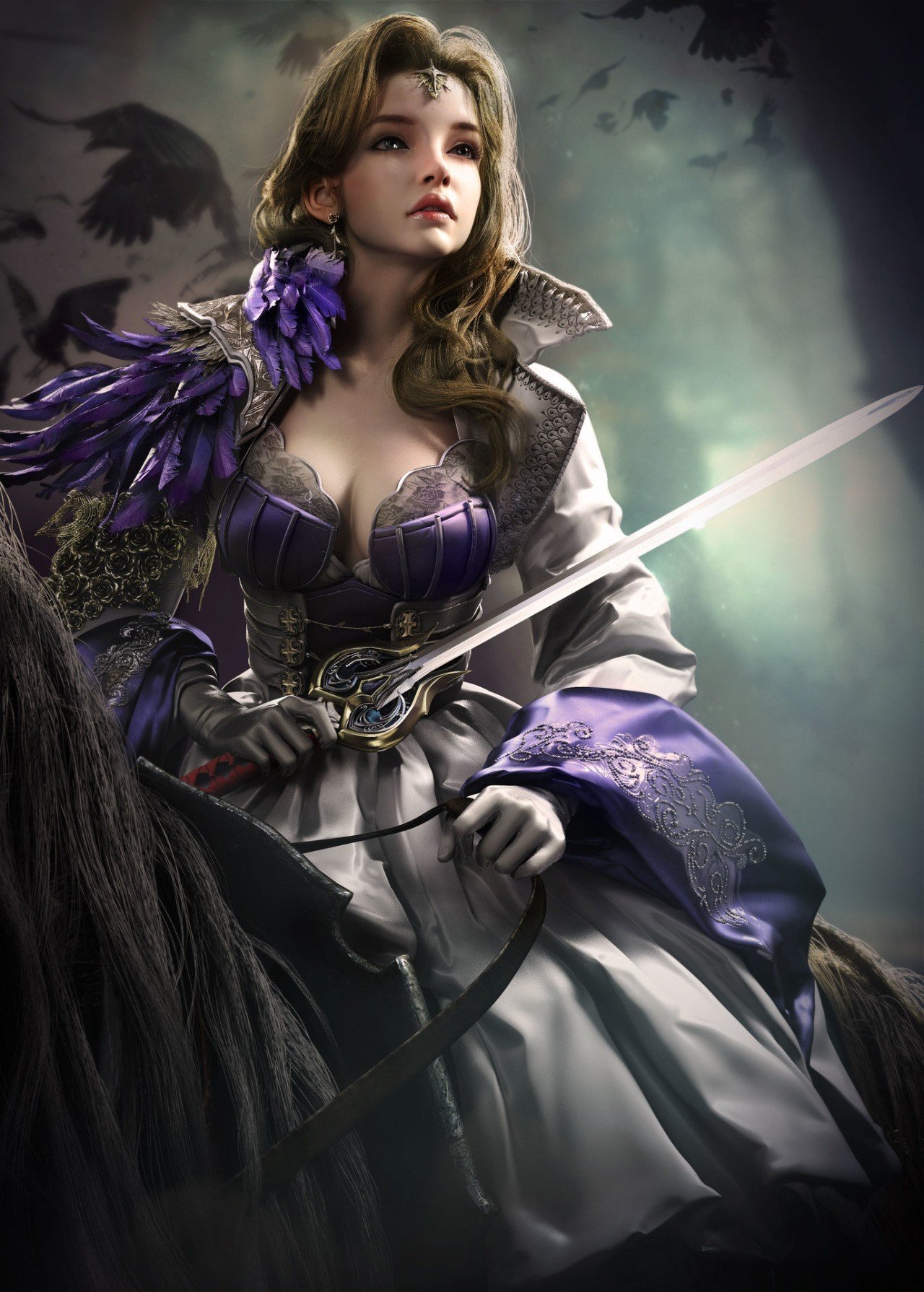
They named her Sexy as a jest at first, the kind of whispered dare thrown across banquet tables and training yards alike. But when the ravens began to circle low and the wind combed the fields into somber waves, the name shed its laughter and clung to her like armor. She rode beneath a flurry of violet plumes, steel drawn bright as morning, a quiet storm wrapped in silk and resolve. Beauty in her kingdom had always been a spectacle; she made it a strategy.
Where others tempered courage with caution, she tempered it with grace, the measured poise of a blade that never wavered. Rumor said her sword knew the language of oaths, that it hummed when falsehood approached. The courtiers tried to own her with glances; the brigands tried to break her with ambush; both learned that desire gapes like a snare when it underestimates the hunter. She wore her allure like a banner not to invite conquest, but to herald it.
Night after night the borders frayed, shadows testing the edges of the map. She answered the dark with a steady hand on the reins and a gaze lifted to the omens above, promising the world an elegance that would not yield and a ferocity that would not fail. In a land that mistook the heart for a weakness, she would make it a weapon, and the name they’d once used to tease would become the battle cry that bent the horizon.
Love?
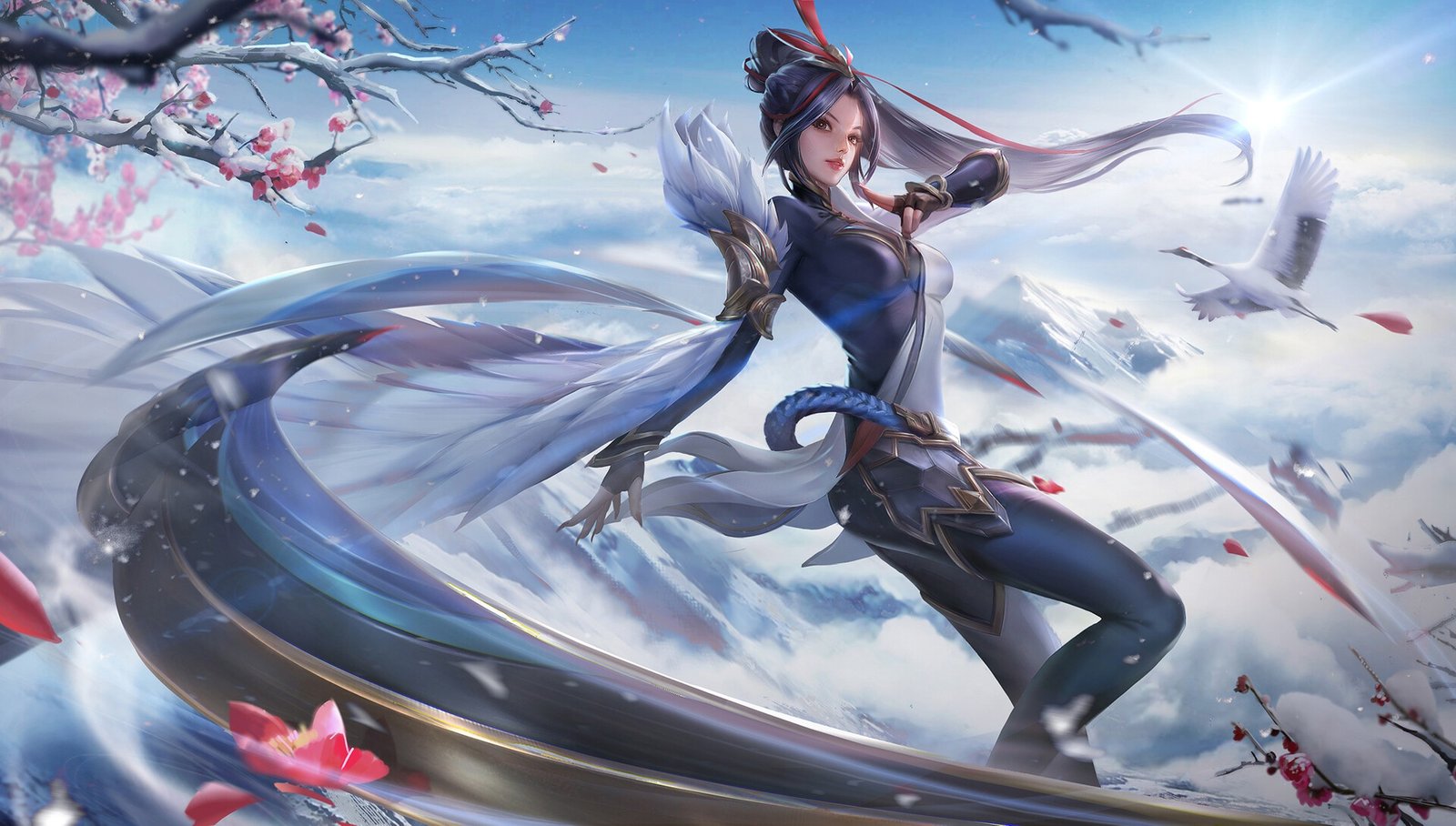
Between snows that drift like shed feathers and blossoms that refuse to freeze, the mountains hold their breath. In that breath, a dancer carves a crescent through the sky—armor gilt, ribbons bright as arterial dawn, her steps calling cranes from silence. The wind remembers her name as a hush, the curve of her blade a sliver stolen from the sleeping moon.
They call her oathkeeper, but oaths are only winter’s version of longing. Once, when the moon turned its dark face to the world, she made a promise to the unseen: to guard the pass, to hold her heart like a lantern cupped against night. Love, she learned, is not a blossom or a storm; it is the patience of ice and the sudden thaw, the perilous bridge between petal and steel.
Now petals fall like small confessions, and every step writes a question across the clouds: whom will she save when the boundary breaks—her people, or the one who taught her how to hear the silence between wingbeats? The sky keeps its counsel. The cranes draw their pale arcs. And somewhere beyond the bright snow, the moon turns, preparing its shadow for her answer.
Love?
Between snows that drift like shed feathers and blossoms that refuse to freeze, the mountains hold their breath. In that breath, a dancer carves a crescent through the sky—armor gilt, ribbons bright as arterial dawn, her steps calling cranes from silence. The wind remembers her name as a hush, the curve of her blade a sliver stolen from the sleeping moon.
They call her oathkeeper, but oaths are only winter’s version of longing. Once, when the moon turned its dark face to the world, she made a promise to the unseen: to guard the pass, to hold her heart like a lantern cupped against night. Love, she learned, is not a blossom or a storm; it is the patience of ice and the sudden thaw, the perilous bridge between petal and steel.
Now petals fall like small confessions, and every step writes a question across the clouds: whom will she save when the boundary breaks—her people, or the one who taught her how to hear the silence between wingbeats? The sky keeps its counsel. The cranes draw their pale arcs. And somewhere beyond the bright snow, the moon turns, preparing its shadow for her answer.
Sky
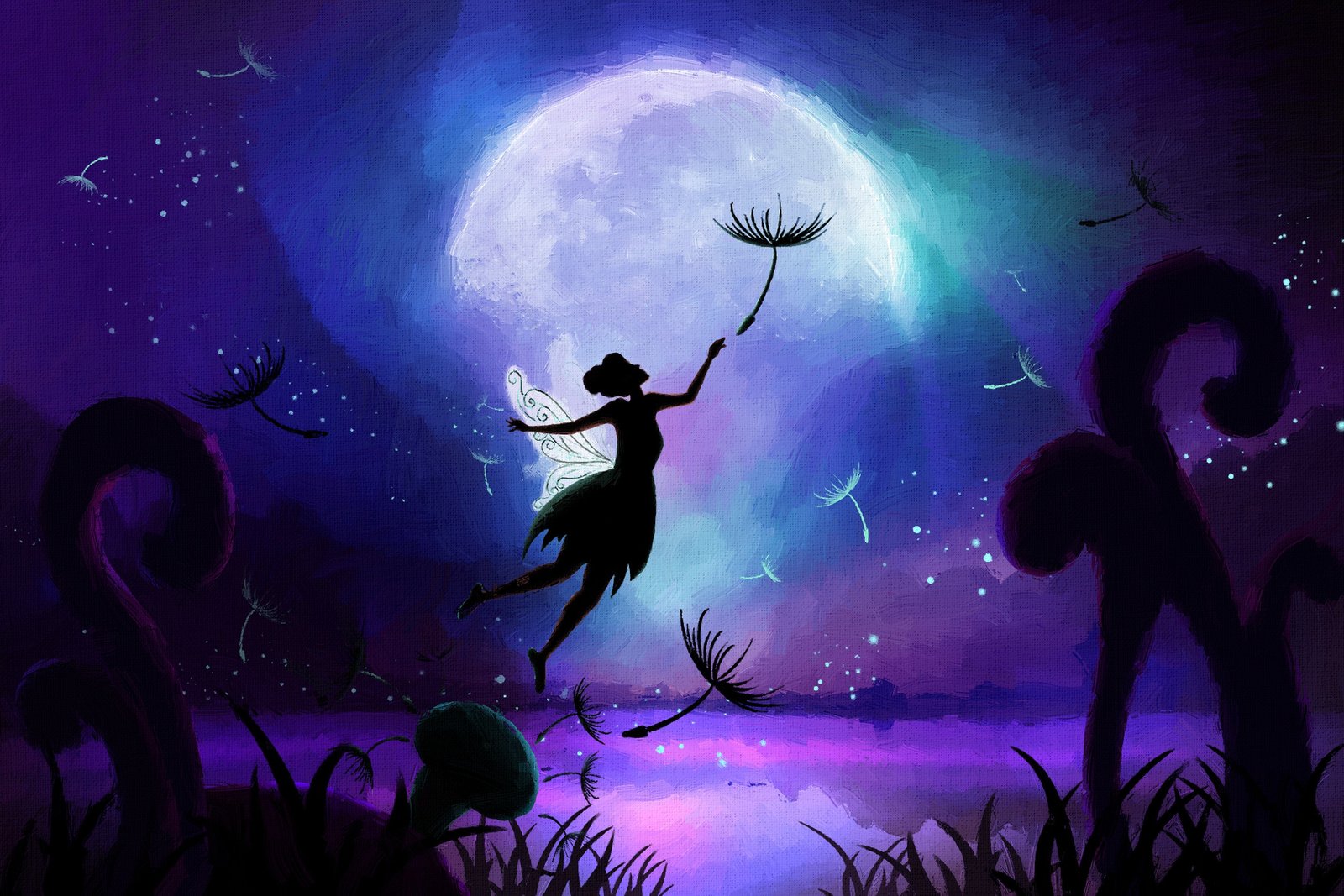
On the night the moon swelled like a lantern, the sky bent low enough to hear. Dandelion clocks unraveled into constellations, their seeds drifting like small promises, and a winged silhouette rose from the reeds—light as a sigh, dark against the glow. The lake below wore a violet hush, stitched with sparks where the stars had fallen to drink.
She was not meant to cross the reed-line, but the sky had opened like a door, and doors are questions with wind for answers. A single seed brushed her fingertips, warm as a secret, sketching a map in the dark: a route through night where the ferns curled like question marks and mushrooms kept the ground’s last gossip. Each beat of her wings thinned the distance between wishing and doing.
By morning, the world would pretend nothing had happened. Yet a trail of floating seeds would arc toward the great white coin above, pointing to the seam where stories slip through. Follow them and you will learn what the sky has always wanted—to stop being a ceiling and become a road—and that the first step onto it is never taken alone.
Man
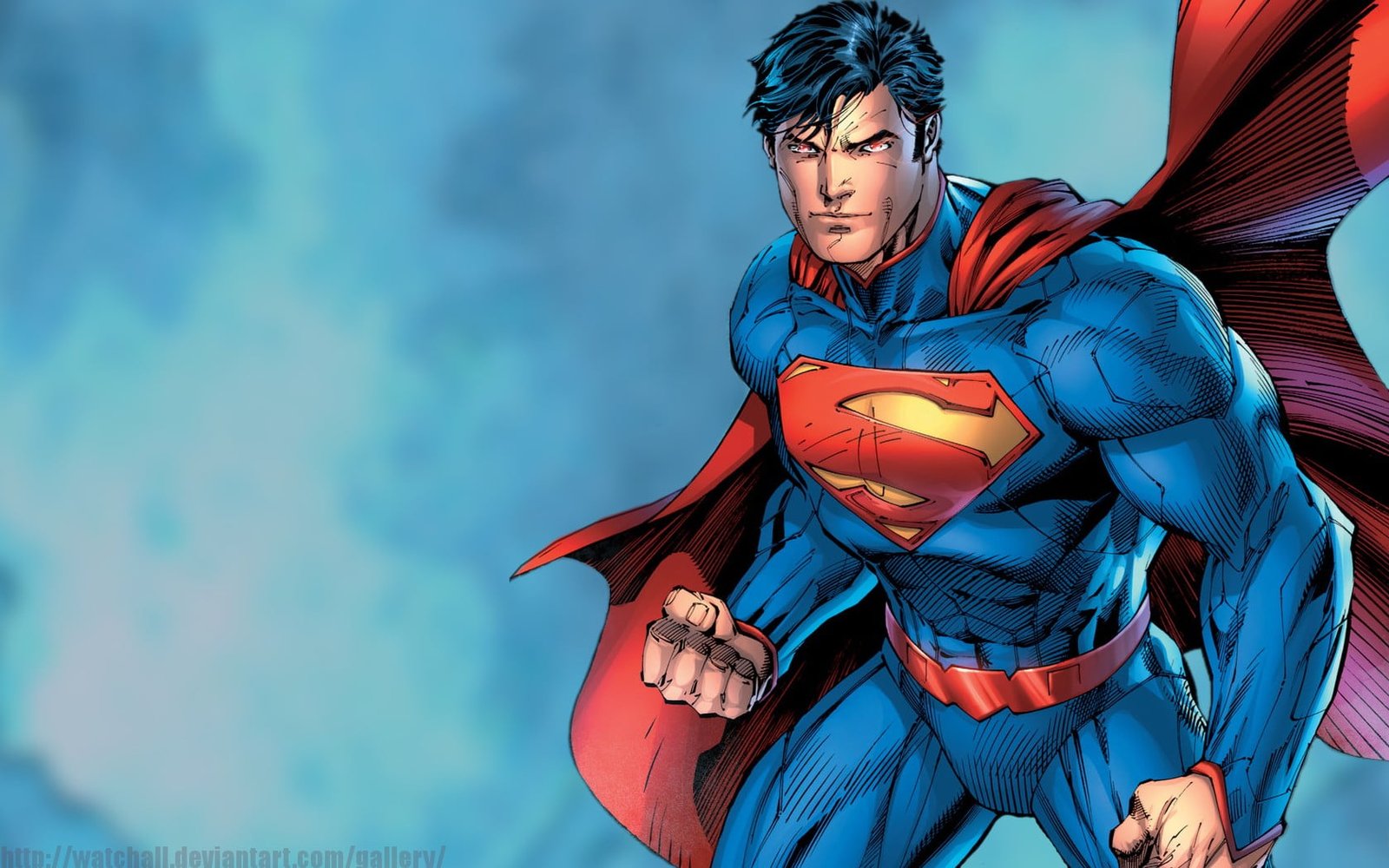
The sky remembers him first: a streak of color and will, a red banner carving silence into shape. He rises from the hush between heartbeats, the emblem at his chest bright as a vow, as if the morning itself learned to speak and chose a single letter to carry the sound. Cities point, children whisper, storms hesitate. In that pause the world decides he must be more than flesh, and he decides he must be exactly that—because power is easy, but promise is not.
They’ve given him titles that scrape the stars, names too large for any doorstep, but the one that matters is smaller, heavier: man. It is the word he measures himself against when the wind stills and the cape falls quiet at his back. To lift a bridge is simple; to lift a stranger’s sorrow is work that trembles the bones. He flies to be nearer, not higher, mapping constellations of ordinary lives and listening for the fragile music of need.
Tonight, a cry threads the clouds, thin as a match strike, bright enough to turn his face. He goes not as a god descending but as a neighbor arriving, fists unclenched, ready to bear the weight no horizon can hold: the choice to show up, again and again. Before the tale learns its villains or its victories, it learns its center—one heart, steady against the wind. And in that heartbeat, the sky and the streets agree: the myth is only a shadow. The story belongs to the man.
Marriage
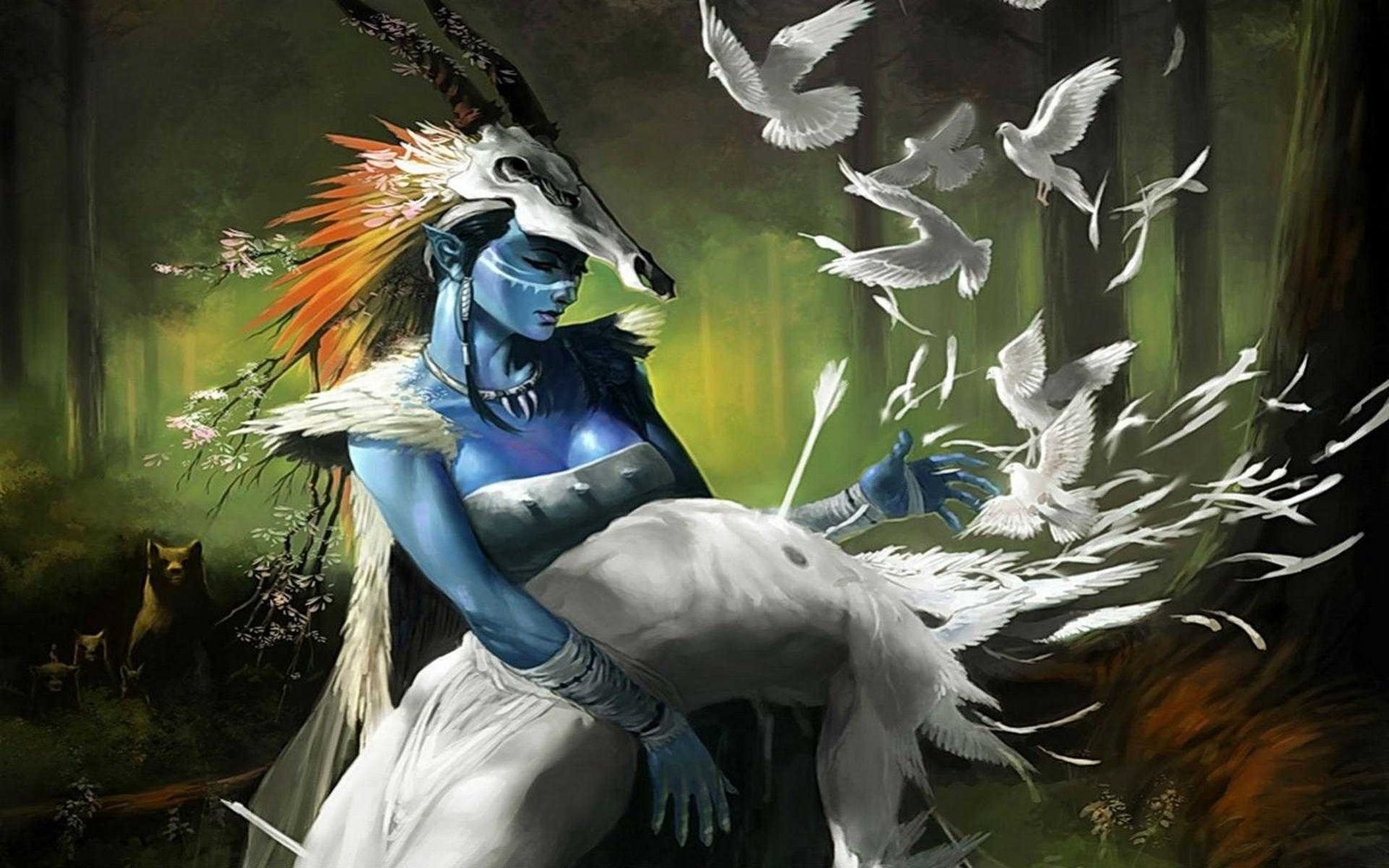
The forest held its breath as the bride of antlers stepped into the green light. Blue as riverstone and crowned in bone, she carried the white stag across the moss like an offering cupped in both hands. From its velvet flank rose a storm of doves, each bird a vow set free, each feather a word the trees remembered. Wolves watched from the shadowed pews, and blossoms leaned closer, curious witnesses to a ceremony older than language.
This was not a union of rings but of hungers and hymns. She pledged her pulse to the woods, to the patient teeth and the patient roots, and the forest vowed sky in return, lending wind to lift what must depart. The veil she wore was made of shed wings; the music, the hush of leaves when the world decides to become more than itself. In her arms, life loosened from body and learned to fly; beneath her feet, soil took the weight and promised to keep what fell.
Such marriages tame nothing. They teach the wild and the heart to share a single tongue, to argue in seasons, to forgive in bloom. But oaths bind as tightly as they bless, and a covenant with the living wood has a long memory. When the last dove vanished into the canopy’s light, the bride listened to the forest’s answer and knew the story of their union would be written in trials—carved by claw and mercy, sung by birds and silence.
Mein Hugo ?
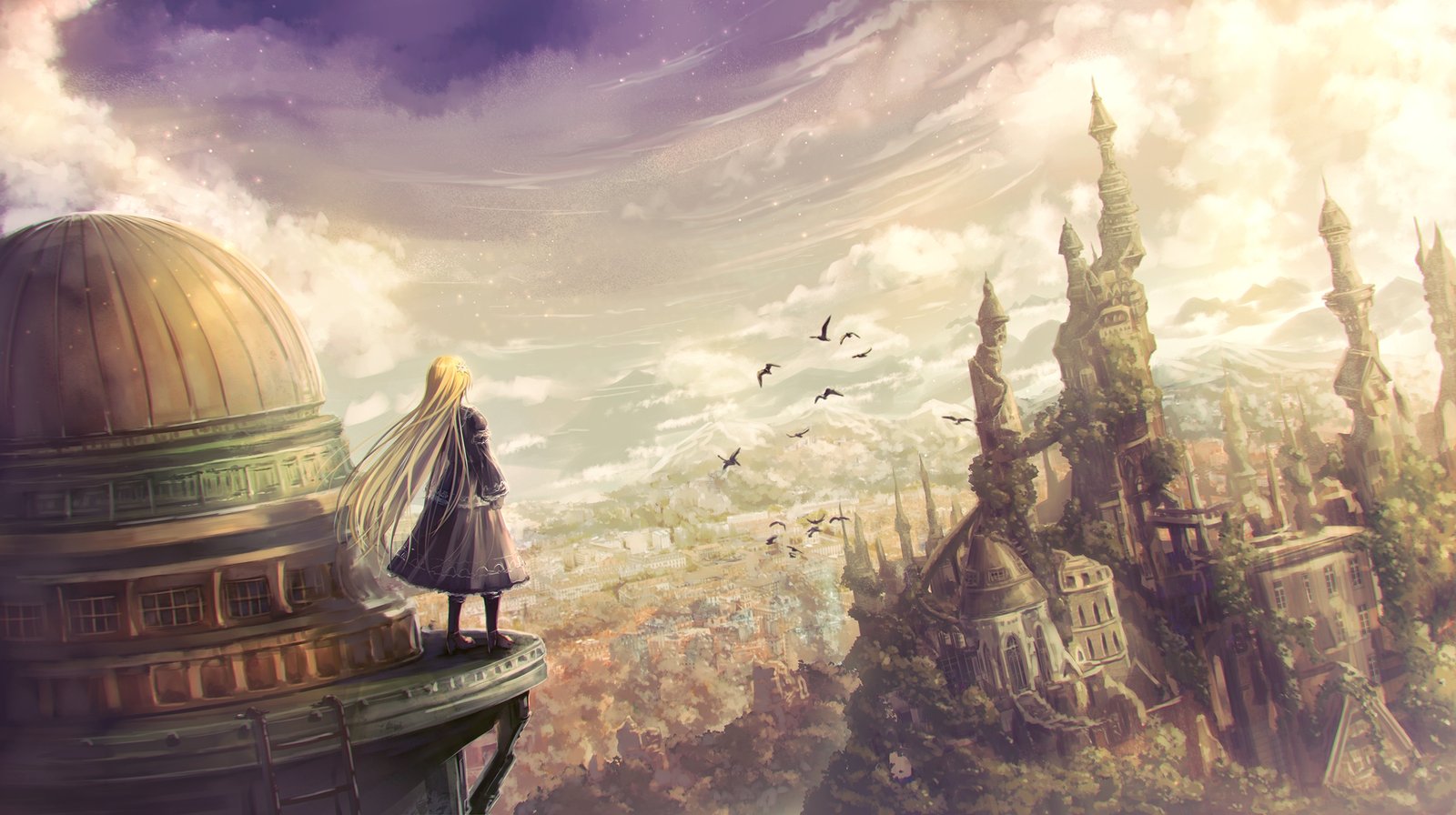
From the rim of the old observatory, where the bronze dome wears the light like a crown, the city spills away in a thousand glimmering roofs and ivy-buried spires. Birds cut black runes into a sky of lilac and gold; beyond them, snow peaks drift like forgotten thoughts. I have stood here each evening since the bells first went quiet, listening to the wind comb the stone, repeating a promise that once fit in two hands and a heartbeat: “Meet me where the domes touch the wind.”
They called him Hugo in daylight, but in the hush between hours he was only mine—mein Hugo—laughter tucked into blueprints, pockets full of gears that clicked like secrets. He taught the clocks to dream and the city to remember; he taught me the names of the birds that carried wishes past the rooftops. Then the ivy climbed higher, the streets learned silence, and a letter sealed in brass said only: Wait for the sky to turn to honey.
Tonight the honeyed sky arrives, and the flock wheels into a shape I know from his sketches—an arrow pointing to the ruinous towers across the valley. The dome beneath my feet hums, a low, waking note, and the ladder shakes as if the city itself were drawing breath. I slip the little wrench he left me into my sleeve and set my gaze where the birds are falling like stars. If the city is a mechanism, then this is the turning of its first gear—and when it completes its circle, I will find him. I will find mein Hugo.
SEX LOVE POWER
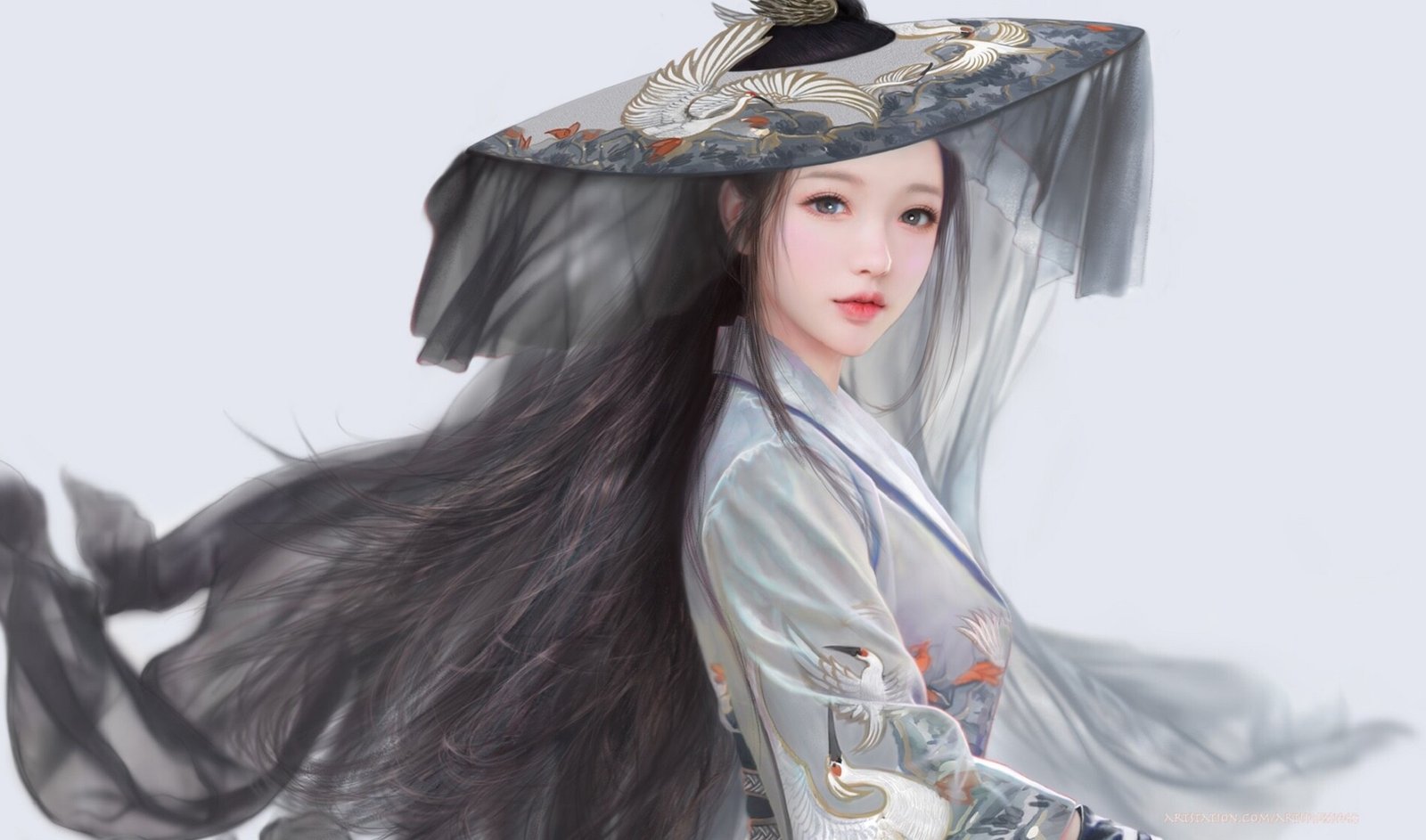
Wind braided through her midnight hair as the veil on her hat whispered like stormcloud silk. Cranes stitched in moon-thread glided across her sleeves, their wings frozen mid-flight, as though they knew the sky would change before dawn. In the mirror-smooth silence beneath the palace eaves, she stood as both omen and invitation—an elegant cipher the court had learned to fear, the girl from the Lotus Court grown into a woman who carried secrets the way other nobles carried blades.
Three words had raised empires and buried them: sex, love, power. She had studied each as if it were a language—body as script, heart as code, throne as grammar. Desire could turn a guarded door on its hinges; affection could bind a blade to its sheath; authority could command tides that affection and desire alone could never move. She knew their prices, too, and the quiet ruin they left when spent. Still, she gathered them like coins in a single purse, ready to spend all at once.
Tonight, the court would celebrate a harvest it did not deserve, and the tyrant would drink to futures he would never see. She would enter as a ripple of gauze and leaving fragrance, a rumor in motion, and she would write the first line of an ending on the parchment of a kingdom’s certainty. When the veil fell—by choice, not gravity—the cranes on her sleeves would witness a new constellation traced across the night: three stars in ruthless alignment, flaring into one.
Kyphosis
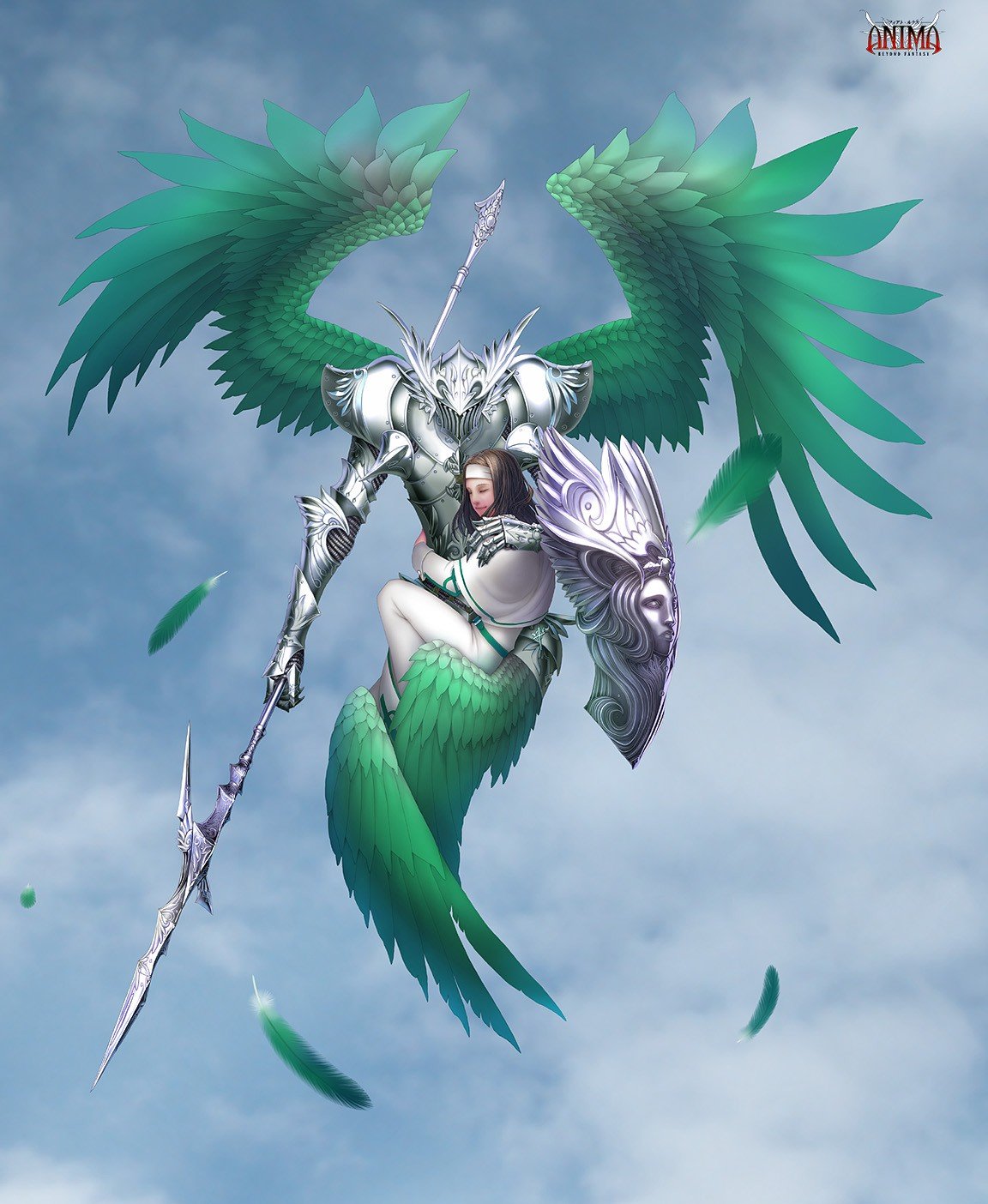
The sky once stood straight as a sword; now it arches like a tired back, a blue cathedral bent by centuries of prayer. Through that bowed firmament glides a winged sentinel, his silver plates feathered with emerald, his spear planted in the wind as if the air were earth. Each beat of his pinions loosens a green thought that drifts down and disappears, and the world below learns to speak in whispers so as not to startle the falling.
In the hollow of his armor, where steel caves gently inward, a veiled acolyte rests, cradled by the curve that others call a flaw. She listens to the hush of heart and hinge, to the face upon the shield murmuring decrees only she can hear. They name his stoop a wound, but to her it is a doorway—an aperture shaped like mercy, wide enough for a frightened life to enter and breathe.
Beneath them, spires lean to match the heavens, and people grow into the posture of their age. Yet old maps whisper of a straight horizon where storms do not bow and the wind refuses to kneel. If she follows the mask’s riddles to that place and speaks her true name aloud, the feathers will stop their snowfall, the sentinel will lift or break, and the world will learn whether its salvation lies in unbending—or in the holy curve that holds it together.
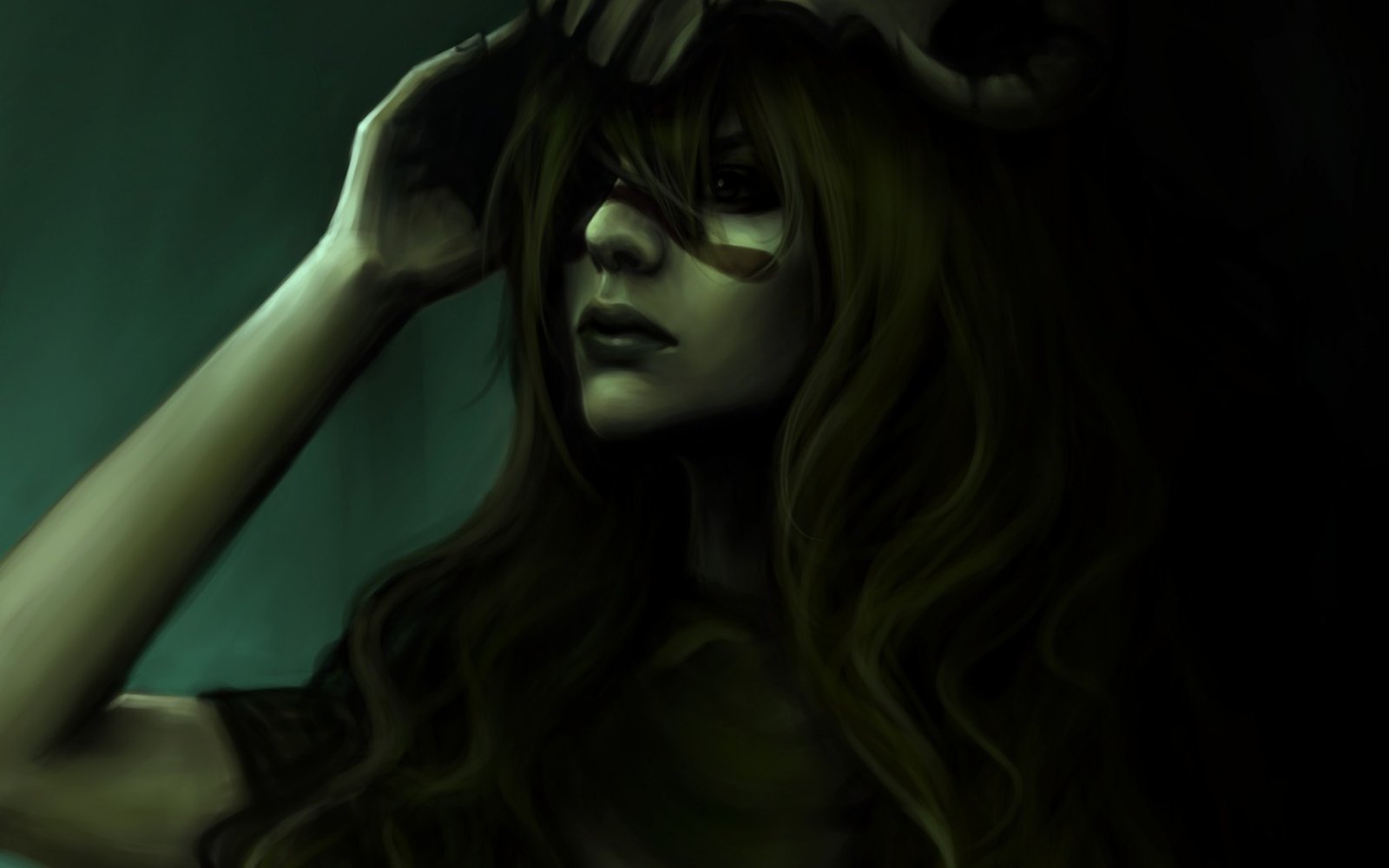
Claws
She fits the skull to her brow as if it were a memory, bone cold against a heat she cannot name. Green dusk pools in the room, a tidal shade that lets the edges of her face sharpen and soften by turns, like a blade learning to breathe. A thin band of paint cuts beneath her eyes—war or mourning, no one has decided—and the hair that frames her cheek falls in dark waves that drink the light. Outside, the wind combs through iron gutters, sounding like the patient rasp of something sharpening itself.
They taught her that the city was built upon paws: foundations sunk into lairs, streets laid over den and burrow, every corner claimed by a sentinel of teeth. You can forget that when the lamps burn bright enough, when laughter muddles the tracks, when you mistake quiet for safety. But tonight the old ways press up through the floorboards. The mask in her hands is a reliquary for vows that were broken and vows that refused to die. When she lifts it higher, the empty sockets tilt toward her, and the room seems to tilt with them, as though gravity belongs to the bones.
There are claws in this story you and I are telling—some grow from the dark, some from regret, and some from the hands we will not let go. She does not yet know which will be hers. She only knows the night has come with questions, and that every answer will leave a mark. As she steps past the door and the shadow-latticed hall unfurls, the first lesson returns like a heartbeat: not all claws scar. Some carve a way through.
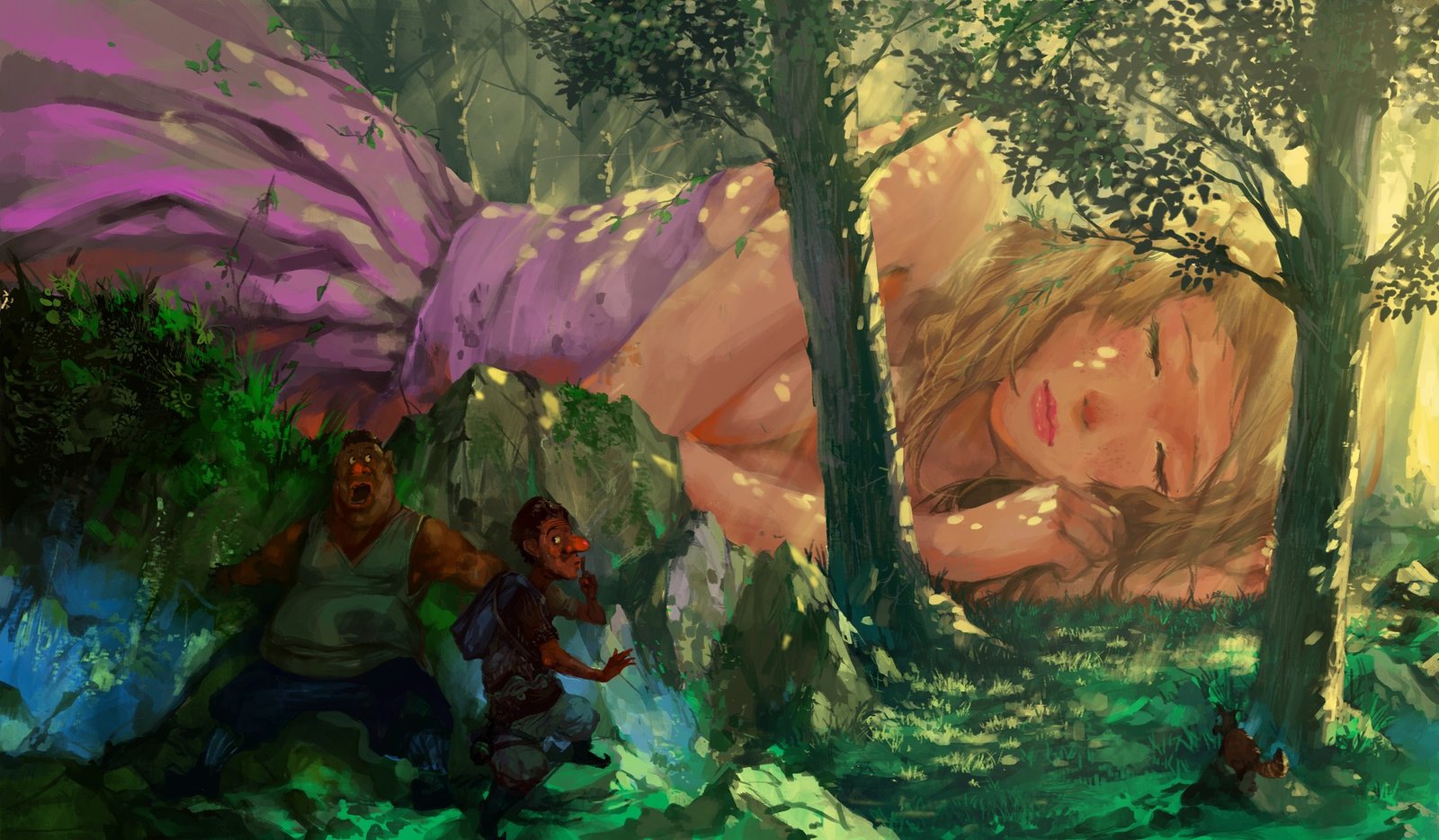
Pomegranate
The forest held its breath where she slept, a young colossus folded among roots and sunlit ferns, her violet dress pooled like dusk between the trees. Light sifted through the canopy in bright flecks, peppering her cheek like scattered seeds. Every rise of her shoulder stirred the leaves; every sigh tuned the birds to silence. The old paths called this hush Pomegranate—the place where sweetness and peril lay in the same skin.
Two small figures crept along the moss, men who trafficked in rumors and debts, drawn by a tale older than their knives. They had heard there was a fruit cupped in the sleeper’s palm, not ruby but radiance, each seed a held season, each bite a binding. One wanted a harvest for a blighted village; the other wanted coin enough to rinse his name. Between them a squirrel watched like a priest of the understory, as if aware that oaths were about to be broken.
For the forest’s fruit was not meant to be plucked; it was a door disguised as a jewel, a tasting that changed the taster. Steal a seed and the world remembers you in winter; taste six and the world will not forget. When their shadow crossed her fingers, the sleeper’s lashes trembled, and the dappled light tightened on the ground like a net. This is where our story opens: with a breath held too long, a hand reaching farther than wisdom, and a seed deciding whose mouth it would choose.
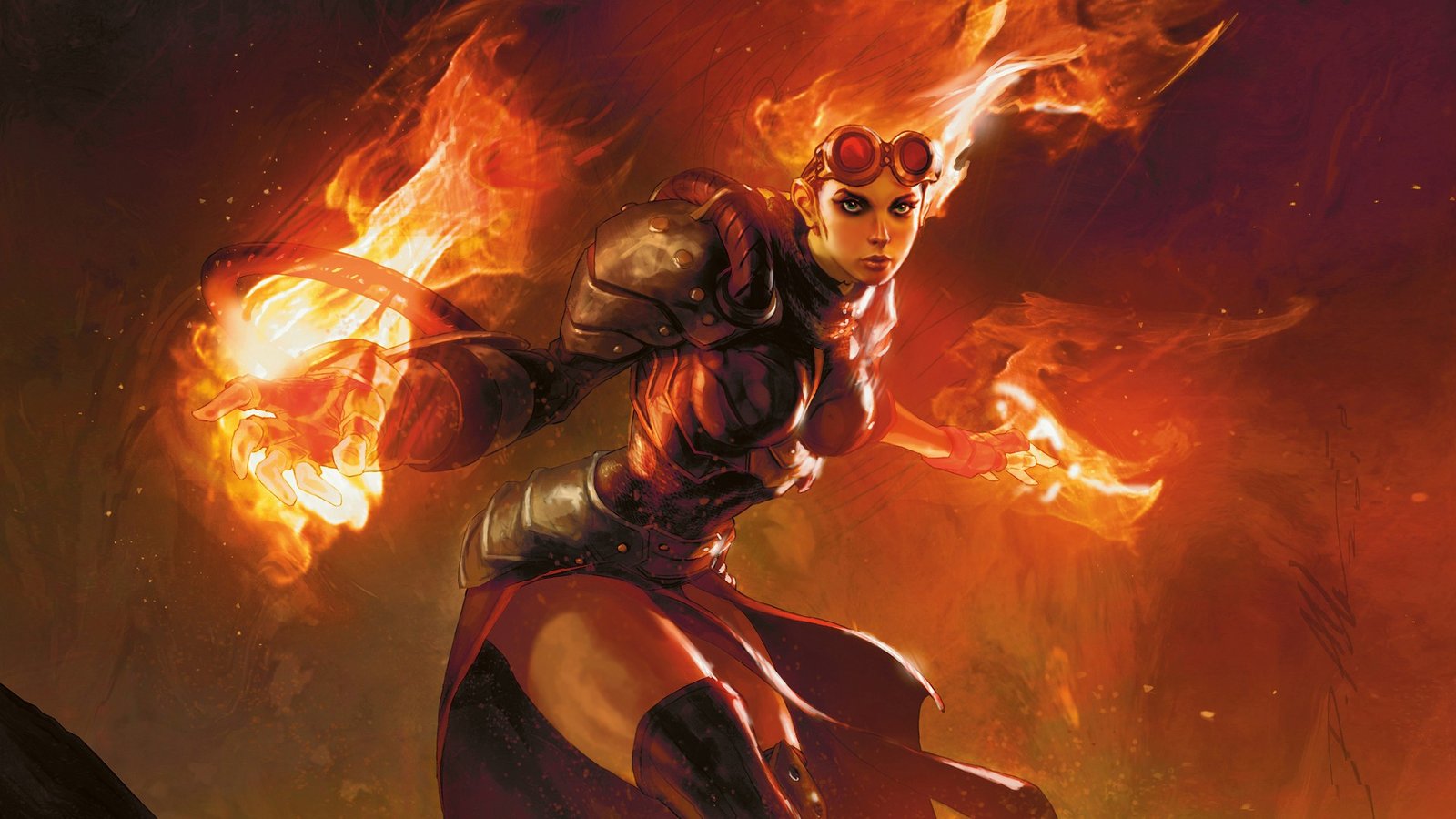
Bitterness
In the city where heat never slept, the night smelled of iron and orange peels left to blacken on the grates. She walked there with fire braided into her hair and cinders cupped like coins in her palms, an alchemist of anger, a conjurer of breath that burned. The goggles on her brow were not for seeing farther, but for remembering the glare of the last door that closed on her—white-hot, definitive; the moment when warmth learned the taste of ash.
Flame obeyed her because it recognized its own orphan. It licked her knuckles, curled around the plates of her armor, and waited for a name to burn; but she did not speak it. Names are sweet, and sweetness was a language she had forgotten. What she knew was the flavor left in a mouth after a hard truth—the rind of a promise kept by someone else, the pith of a city that asked for light and found a weapon.
So she set her course by scorches: a map of black kisses on stone, a cartography of the things she could not forgive. Somewhere beyond the next alley, beyond the ring of heat that followed her like a halo turned inside out, someone carried a colder fire, the kind that hollows. When they met, one of them would be cured of bitterness. The other would learn how long even ashes can burn.
Soft body
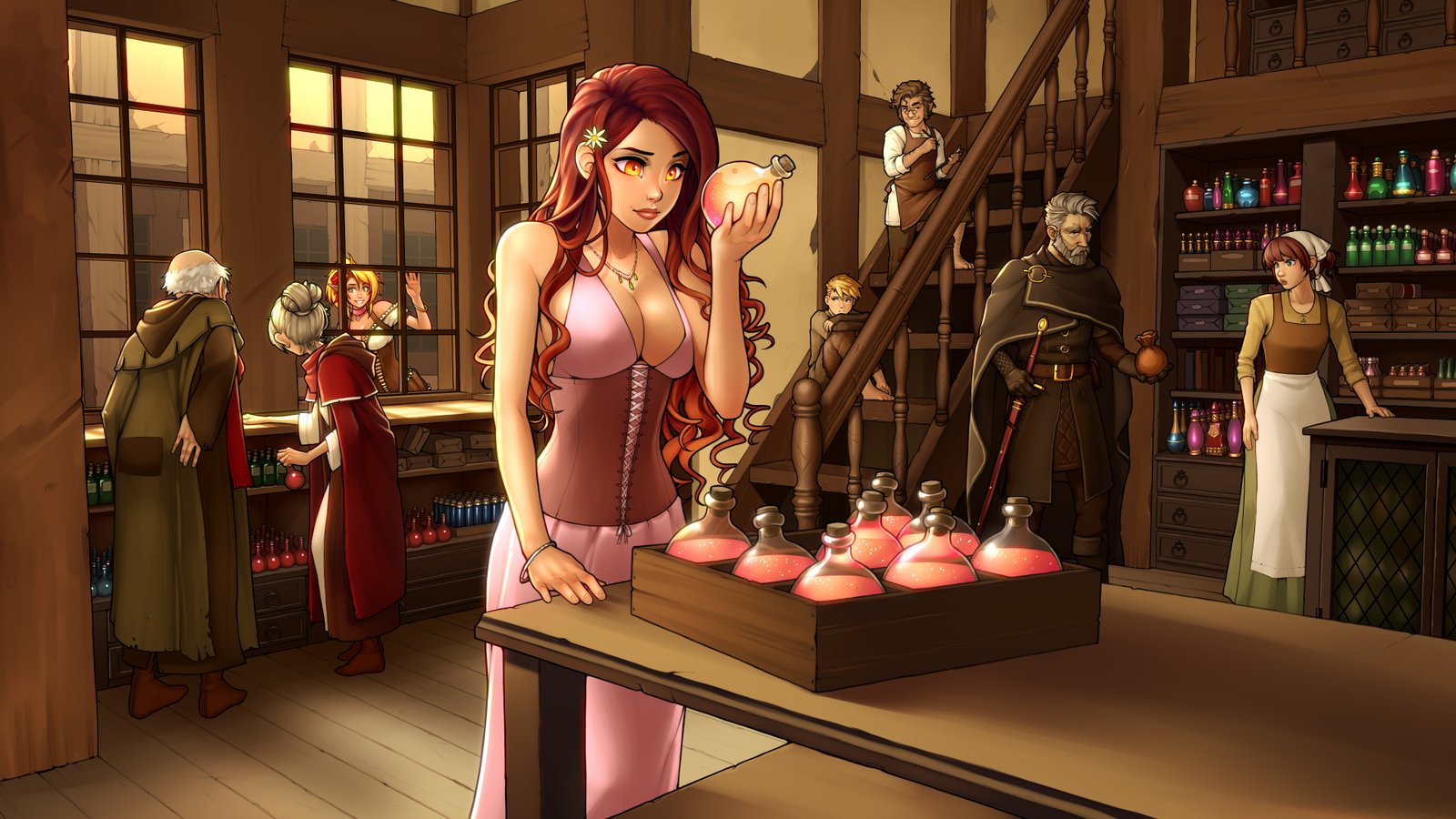
At dusk the apothecary held the last of the sun like a bottle of honey, panes blushing gold over rows of glass throats and corked secrets. I turned a small vial in my hand, pink light pooling and rolling as if it were a living thing that preferred curves to corners. Someone had written a shy label on its belly—Soft Body—and even the letters looked as though they might slouch if left alone. They said this draught could loosen what the world had hammered hard: bone from its stubborn angles, scars from their tight stories, doors from their certainty of being shut.
Behind me, the shop murmured with errands and ordinary needs—an old pair squinting at tonics, a traveler cloaked in road dust weighing a pouch, an apprentice peeking from the stair with ink on his fingers. The keeper watched without watching, the way one does with dangerous things that behave themselves only because everyone is polite. “It doesn’t erase,” she’d told me once, “it teaches.” Softness that slips through bars, patience that outlasts steel; but also a warning that if you let it, it will soften the borders you thought were you.
I had come for thread and feverleaf and left instead with a promise pressing warm against my palm. There are places in this city where only angles are allowed—vaults, verdicts, names chiseled into stone—and someone I love has vanished into one of those rooms. So I tucked the vial close, feeling the pulse of its gentle tide, and made a quiet pact with the light inside it. If the world insists on hardness, then I will learn to flow; and before the night is spent, something that believed itself unyielding will remember how to bend.
My pineapples
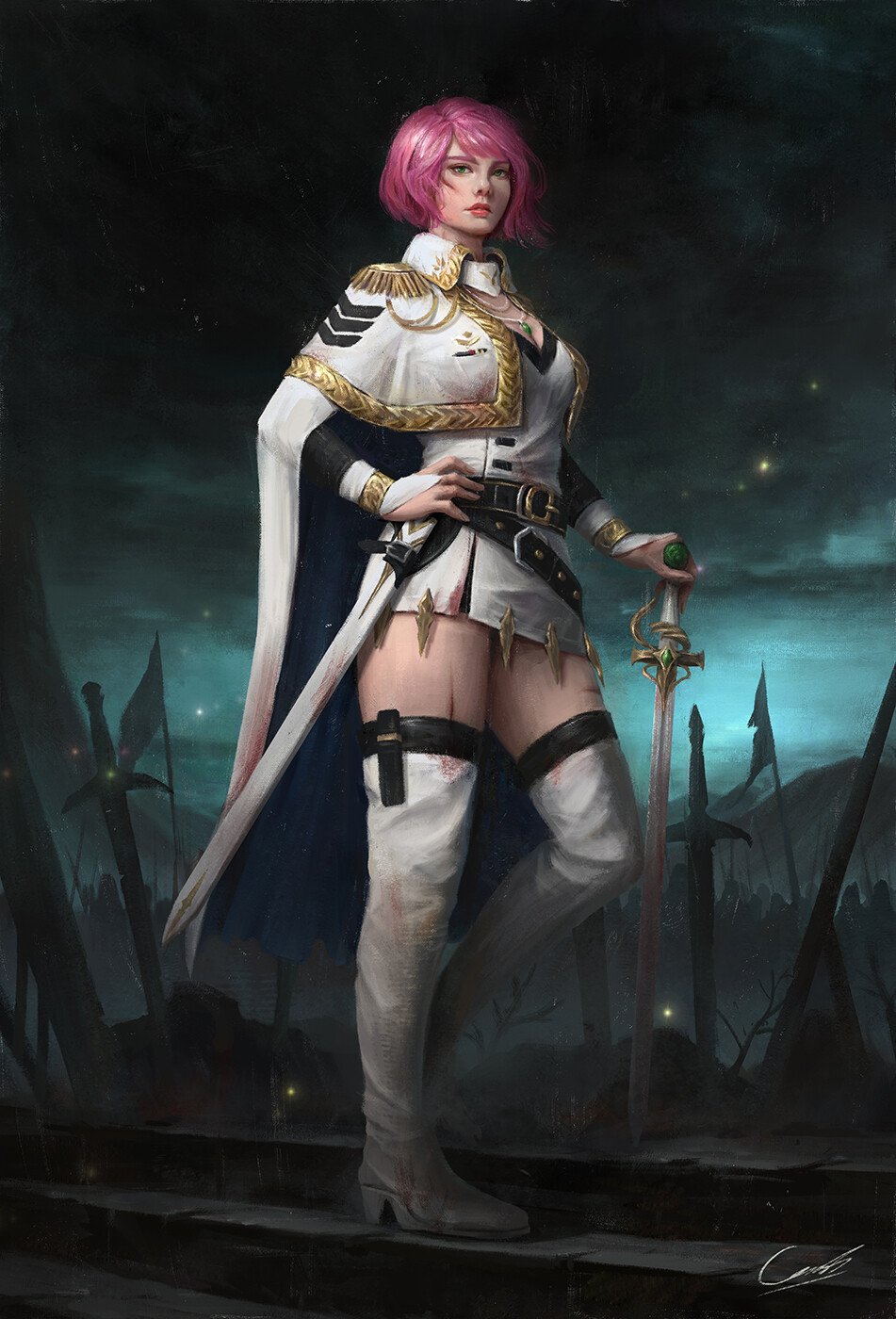
The night had the color of a healing bruise, and the field below was stitched with broken flags and swords left standing like thorns. She waited at the top of the black steps, a figure out of frost and brass: white coat trimmed in gold, cape stirred by a saltwind that had strayed far from any sea. Her hair, a flare of wild rose, refused the darkness; the emerald in her sword’s hilt caught the scattered starlight and held it like a secret. Blood scalloped the edge of her hem, but her stance was all poise—one hand at her belt, one on the promise of steel.
They called her the Lady of Pineapples, as soldiers do when fear needs a laugh. The alchemists had built them to her design—spiked, potbellied bombs that could turn a gate into gravel—so the name stuck, bitter and sweet on the same tongue. But when she said, “my pineapples,” she meant more than iron. She meant the orchard she’d left on a southern island where the air was sugar-thick and storms came warm; she meant her mother’s knife ringing on a cutting board; she meant seeds sleeping in a locket that hung against her collarbone, a green gem the exact color of future leaves.
Dawn would bring drums, and the valley would answer with thunder; the empire wanted the seeds as currency, as crown, as leash. She wanted them as fruit. So she would gather what the night had not stolen—her ragged banners, her quiet soldiers, her clever little bombs—and step down into the cold with a farmer’s patience and a commander’s aim. Let the chroniclers call it conquest if they must. When steel and smoke had finished their arguments, there would be a harvest.
Broke
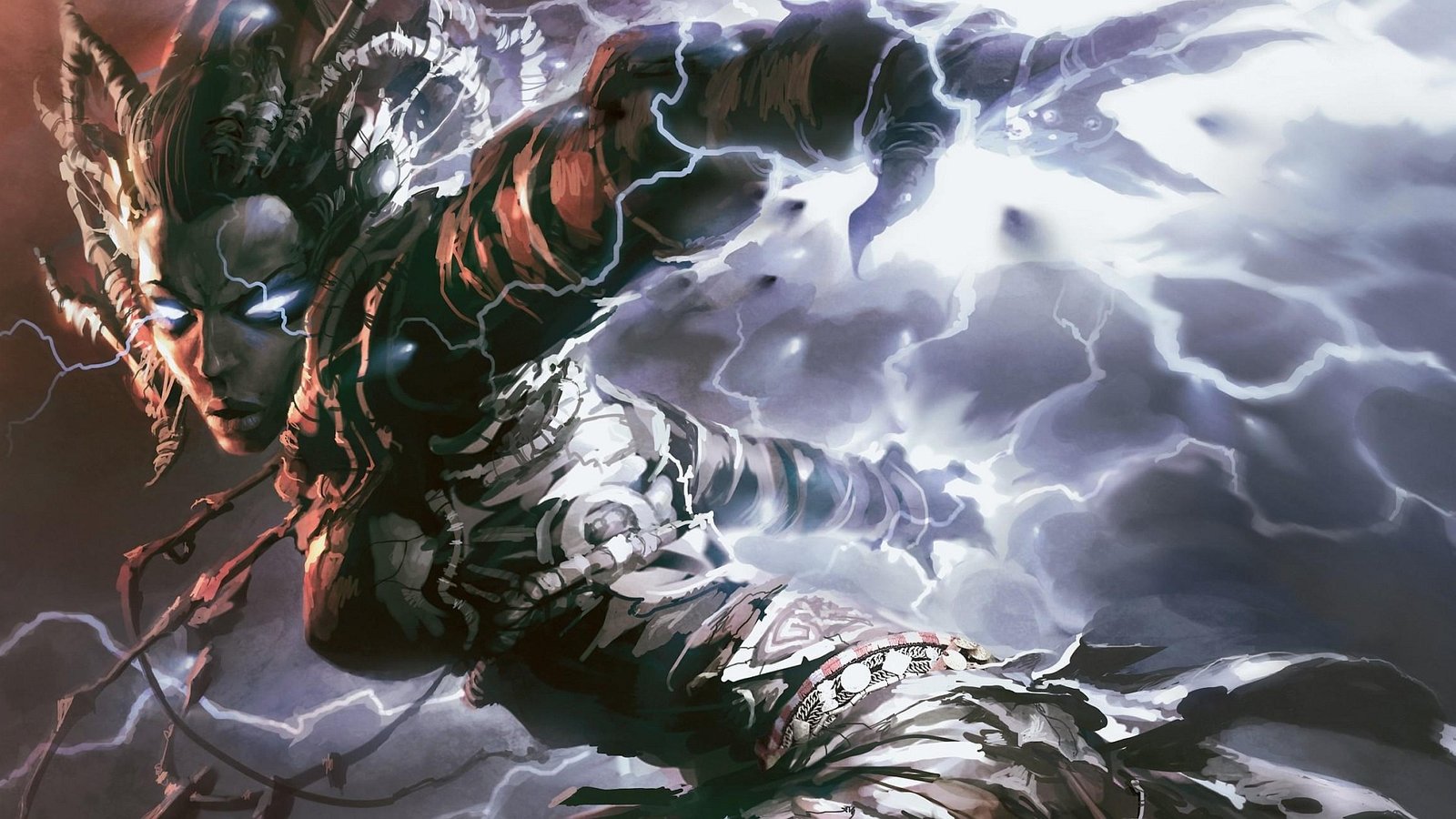
The night didn’t fall so much as fracture. A seam split across the clouds and bled thunder, and through that wound she descended—wrapped in bands of scavenged metal and stormcloth, eyes lit with the cold fire of a sky that no longer trusted itself. Lightning skittered over her skin like nervous handwriting, sketching the outline of a name the world had forgotten how to pronounce. When her feet struck the earth, the crack traveled outward, a spiderweb through stone and silence. Somewhere, a bell tolled once and failed to find a second note.
In the city below the weatherline, they learned to count by kilovolts and to pray in amperage. Power was coin; coin was law; law was a grid woven by patient tyrants. She had been their conduit—paid in rations and promises, drained to keep their towers bright—until there was nothing left of her but the hum. They called her worthless when the meter spun to zero, broke when the ledger found no more to take. So she reached into the sky for what they had taken from her, and something inside the firmament snapped like a bad wire.
Now the storm answers to her anger, and the city hunts the echo of its own crime. She moves where the lightning leads, stitching herself together with every strike, reckless enough to draw the thunderheads closer and tender enough to wonder if the world can be mended with the same hands that shattered it. The first truth she carries is simple and terrible: some debts can’t be paid back—only broken cleanly, so nothing that fed on them can grow again.